It’s a new year, which means we’re all asking the big questions. Who am I? What do I do? Why does my HR training say I’m at 0% again? It’s a time for reflection, resolutions, makeovers. A moment to pause and make sure we’re starting our learning year off strong. Beginnings, everywhere.
And in online courses, beginnings often matter more than we realise.
The moment a learner logs in, they start making sense of the space. They are — often subconciously — deciding what kind of experience this will be and, more importantly, whether they feel supported.
The course introduction is where we build that foundation. It’s the first signal of tone, presence, and intention. If you are refreshing your courses for the new year, the introduction is the most effective place to start. So, let’s start at the beginning.

A welcome that invites learners in
A short welcome message or video gives learners a chance to meet you, not just your name or profile picture. It helps them understand who the course is for, how to begin, and what kind of learning space they’ve entered.
This doesn’t need to be polished or long. What matters most is that it feels human, clear, and intentional.
A good course welcome usually covers:
- Why this course matters.
- What learners will gain.
- What to do first.
🫶 Inclusive moment: If you’re using video, include closed captions to support learners using screen readers, learning in shared spaces, or watching without audio.
Making room for connection
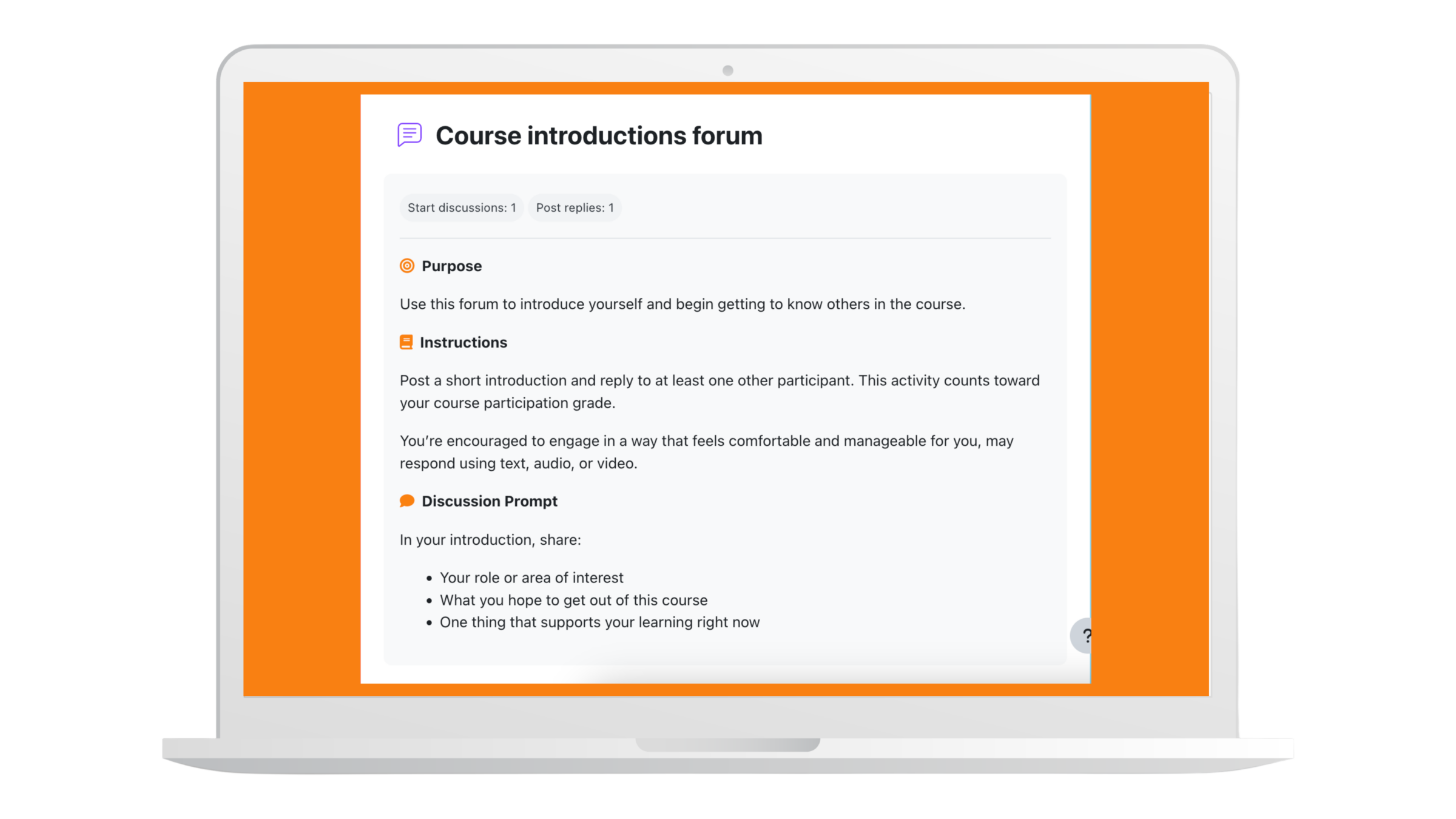
An introductions forum gives learners a low-stakes way to show up and see one another. It signals that learning here is not just about content, but about people.
Simple prompts work best early on. At the beginning, learners are still finding their footing, and low-stakes questions help them start to engage with confidence.
Introductions prompt ideas:
- What are you hoping to get out of this course?
- What experience or perspective are you bringing with you?
- Where are you joining from, or what does learning look like for you right now?
Be sure to post your own introduction (our goal is to show that we’re human, not a robot! 🤖), and, if you can, reply to each learner. A brief instructor response helps model engagement and sets expectations for participation.
🫶 Inclusive moment: Invite learners to choose how they introduce themselves. Text, audio, and video options help make participation accessible and comfortable for different preferences and abilities.
Don’t hide the map
Surprise can be a powerful tool for engagement within activities. The course itself, however, should not be a surprise. The goal is joy, delight, and curiosity, not anxiety.
A visible course outline helps learners understand how the course is organised and what lies ahead. Clear structure supports confidence, accessibility, and planning. This doesn’t need to be detailed or long.
A short overview can be enough to show:
- How the course is structured.
- Where key activities or assessments happen.
- What a typical week or unit looks like.
When structure is easy to see, learners spend less energy orienting themselves and more energy learning.
🫶Inclusive moment: Clear, consistent structure supports all learners, especially those navigating new tools, screen readers, or unpredictable schedules.
Design with your actual learners in mind
A short pre-course survey is a simple but powerful way to build connection. It shows learners that the course is shaped by who they are, not assumptions about who they should be. A pre-course survey is also a private communication between you and each individual learner (unlike the course introduction forum, which is visible to everyone), so it’s a good chance for learners to share information they may not be comfortable telling others.
A few focused questions can reveal goals, prior experience, and potential challenges.
Example pre-course survey questions:
- What are you hoping to learn or improve?
- How confident do you feel starting this course?
- What might make participation easier or harder for you?
- What support helps you learn best?
🫶Inclusive moment: My personal favourite pre-course survey question: “Is there anything else you’d like to share that may impact your ability to be successful in this course?” It opens the door for learners to share context or constraints, if they choose, in a private and supportive way.
Beginning as ourselves
Whether you’re teaching at a university, within a corporate L&D team, in a kindergarten classroom or for a government agency, learning is always about people.

Different contexts bring different constraints, goals, and learners. But the beginning of a learning experience asks the same things everywhere. Is this a welcoming space? Is there someone here to guide me? Do I understand how this works?
A thoughtful course introduction helps answer those questions early. It creates connection, reduces uncertainty, and sets learners up to engage with confidence.
Beginnings don’t need to be elaborate — they need to be intentional. When learning spaces feel clear and human from the start, learners are more likely to engage with confidence and succeed.
We’re here with you, at every stage
If you’re thinking about beginnings more broadly, refreshing courses, reworking structure, or planning what comes next, you don’t have to do it alone. From course design and accessibility guidance to platform setup and long-term planning, we’re here to support you throughout the learning journey.
From all of us here at Moodle HQ, wishing you a year of thoughtful beginnings and learning spaces that feel welcoming, human, and made for the people inside them. 🧡