
The United Arab Emirates (UAE) thrives on diversity. With a rapidly growing economy and a multicultural society, the country has embraced bilingual education — particularly in Arabic and English, as a cornerstone of its academic system. English is widely recognised as the language of global business, technology, and higher education, while Arabic remains deeply embedded in the country’s heritage and national identity. This dual-language approach ensures that students in the UAE are well-equipped for both local and international opportunities.
The UAE government has made significant strides in developing bilingual curricula, aligning with its WE THE UAE 2031 goals to enhance education and workforce readiness. Schools and universities across the country, including Ajman University, navigate the challenge of providing a learning experience that fosters fluency in both languages. The key is finding the right technology to support this balance, one that integrates seamlessly with institutional needs and enhances student engagement and learning outcomes.
Meeting the demands of a growing university
As Ajman University expanded its academic offerings and student population, its existing learning management system (LMS) needed to keep pace. They’d been using Moodle, which had kept things running smoothly for years. But with more students coming in and more lessons to manage, they needed a setup that was scalable.
Another area the university wanted to improve was the integration with their SIS (Banner), which handles faculty and student enrollments. While the system was functional, it wasn’t always frictionless—leading to occasional slowdowns and extra admin work during peak times.
Most importantly, bilingual education requires a platform that can easily handle at least two languages. Ajman University has long been committed to delivering a high-quality, bilingual learning experience. With programs offered in both Arabic and English, the university needed a digital learning environment that could support both languages, ensuring an inclusive and engaging experience for students and faculty alike.
Building a smarter bilingual learning experience
To bring this vision to life, Ajman University partnered with Moodle Certified Premium Partner Eummena to strengthen and modernise its learning platform.
One of the most significant improvements was the seamless integration with key systems, including SIS Banner, Zoom and ExamSoft. With these connections in place, administrative tasks — such as managing enrolments and synchronising student data — now run more smoothly, reducing manual effort and freeing up time for teaching and learning.
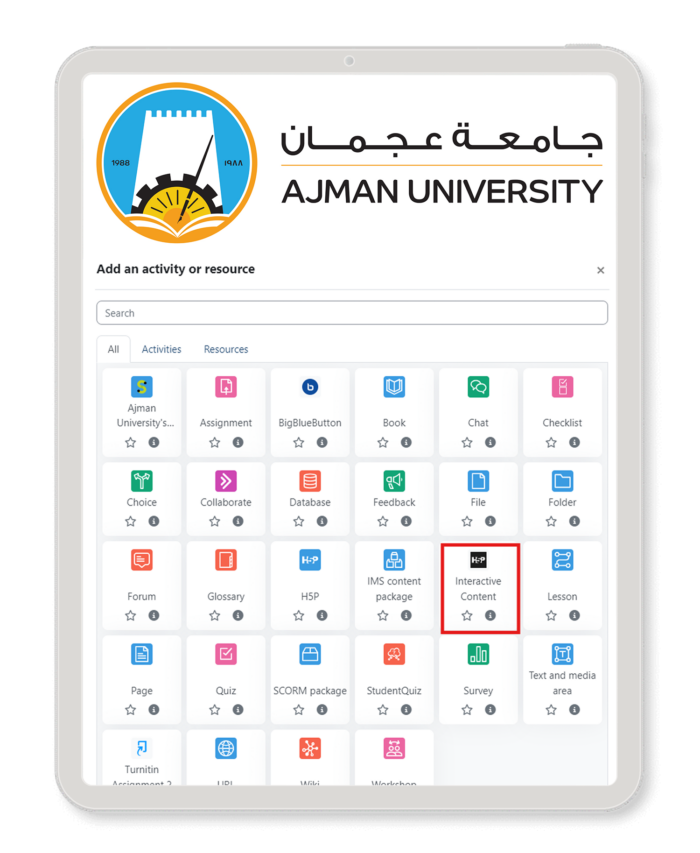
At the same time, new capabilities have enhanced the overall experience for both faculty and students. Instructors can now manage courses more efficiently, with tools that support course merging, improved organisation of course categories, and more flexible assessment options through advanced quiz and grading features. These updates make it easier to deliver structured, engaging courses while giving students clearer insight into their progress.
Supporting bilingual education has also become more seamless. With multi-language content built directly into courses, the platform automatically displays materials in each user’s preferred language. This allows both Arabic- and English-speaking learners to access content comfortably, creating a more inclusive and personalised experience.
“The bilingual support and advanced features of Moodle with help from Eummena have significantly enhanced the teaching and learning experience at Ajman University,” says Inas Abousharkh, Director of Information Technology at Ajman University.
Stronger performance and a more scalable future
Since enhancing the platform, both faculty and students have experienced noticeable improvements in performance and usability.
Page load times are significantly faster, with system optimisations increasing speed by 30–50%. The platform now supports more concurrent users, supported by a 15–20% improvement in database efficiency. These gains have also strengthened scalability, ensuring the system can continue to support Ajman University’s growing academic environment.
While formal impact metrics will be assessed over time, early feedback has been overwhelmingly positive. With a more robust and responsive platform in place, Ajman University is well positioned to deliver a high-quality, bilingual learning experience that can grow alongside its students and programmes.