


Every week, myriad volunteers travel across Alabama — some for hours — to lead worship services, run rehabilitation programmes and support inmates preparing to rebuild their lives. But before anyone can walk through those gates, they need to understand the environment they’re entering; how to show compassion without crossing boundaries, how to offer support without compromising safety and how to be present for someone who is vulnerable without putting anyone at risk.
The Prison Ministry of First Baptist Church Community Ministries has been facilitating that mission for years, working alongside the Alabama Department of Corrections (ADOC) to manage volunteer access and training across the state. With around 3,000 active volunteers, covering everything from faith-based ministry to secular rehabilitation support, the scale of that responsibility is significant. And for a long time, the systems supporting it were struggling to keep up.
When in-person isn’t enough
Before Moodle LMS, all volunteer training was delivered in person. That meant coordinating locations, scheduling ADOC trainers and asking volunteers — many of whom were already travelling significant distances at their own expense — to show up at a set time and place. Test results were scored manually, and certificates could take weeks to arrive. And with no way to train volunteers at scale, growth was effectively capped by the availability of rooms, trainers and time.
Then COVID hit. In-person training was suspended, and a backlog of unqualified volunteers began to build. It was clear something had to change.

Moodle LMS as a mission enabler
Chuck Latham, Prison Ministry Director at First Baptist Church Community Ministries, had seen Moodle LMS in action through the US Air Force JAG’s training programme. When ADOC came looking for a solution, the choice was straightforward. By working with Moodle directly, the team went from requirements gathering to full implementation in just two months.
The platform now hosts training covering everything from PREA (Prison Rape Elimination Act) compliance and zero-tolerance abuse policies, to the protocols governing religious services, contraband prevention and the specific dynamics of working with women in incarceration.
Besides learning the rules, volunteers learn why those rules exist, and how following them protects everyone inside those walls. And with no limit on how many volunteers can train simultaneously, the programme can grow without adding administrative burden.
Real-time readiness
One of the most immediate changes has been the shift from reactive to proactive volunteer management. Facilities can now verify a volunteer’s training status in real time before granting access. Sponsors log in to check whether their volunteers are current. Chaplains can flag gaps before they become problems.
That visibility has made a real difference on the ground. In one instance, a new chaplain taking over a facility checked the system and found that several volunteers were missing a required training module; volunteers who were due to arrive that very evening. One of them logged in, completed the training on the spot, and made it to ministry night.
For ADOC, Moodle LMS has also changed how federal reporting works. The department now has real-time statistics on PREA training completions — a federal requirement — and can proactively reach out to volunteers whose certifications are nearing expiry. That kind of oversight simply wasn’t possible before.
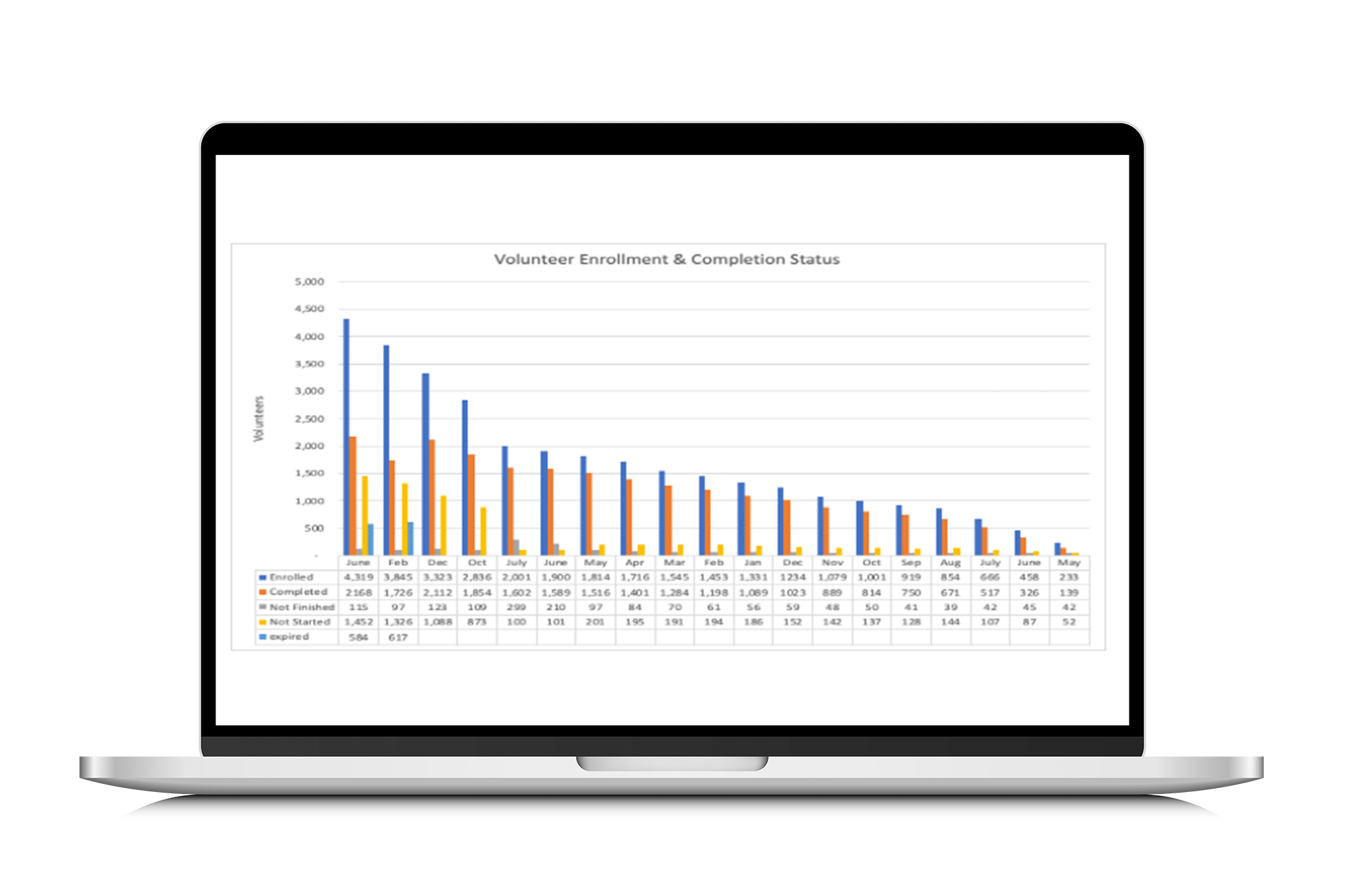
Customer satisfaction is extremely high as evidenced by the outstanding survey results. Volunteers now enjoy real-time results and training certificates emailed directly to them rather than having to wait days or weeks for these credentials. Additionally, Moodle LMS is so user friendly, the Prison Ministry of First Baptist Church Community Ministries easily provides help desk support for ADOC and volunteers through interns and other volunteers. Now volunteers can have a major impact in facilitating prison ministry without even having to enter a correctional facility.
From training to transformation
The ambition doesn’t stop at volunteer preparation. The Prison Ministry is now expanding Moodle LMS’s role into rehabilitation itself.
A new Ministry Partners site had been developed to host a comprehensive re-entry resource directory — built by volunteers, and far exceeding anything ADOC previously had access to — made available to the public, to ADOC counsellors and to inmates preparing for release. The goal is to make sure that people leaving incarceration know what support is out there for them.
Looking further ahead, the team is proposing to use Moodle LMS as the foundation for a re-entry tracking platform; one that would allow counsellors and volunteers to monitor rehabilitation milestones, spot early signs of disengagement and build the kind of data picture that could help reduce reoffending across the state.
What started as a solution to a training backlog has grown into something much wider — a platform that supports volunteers, strengthens oversight and is now being pointed directly at the challenge of keeping people out of the system for good.